

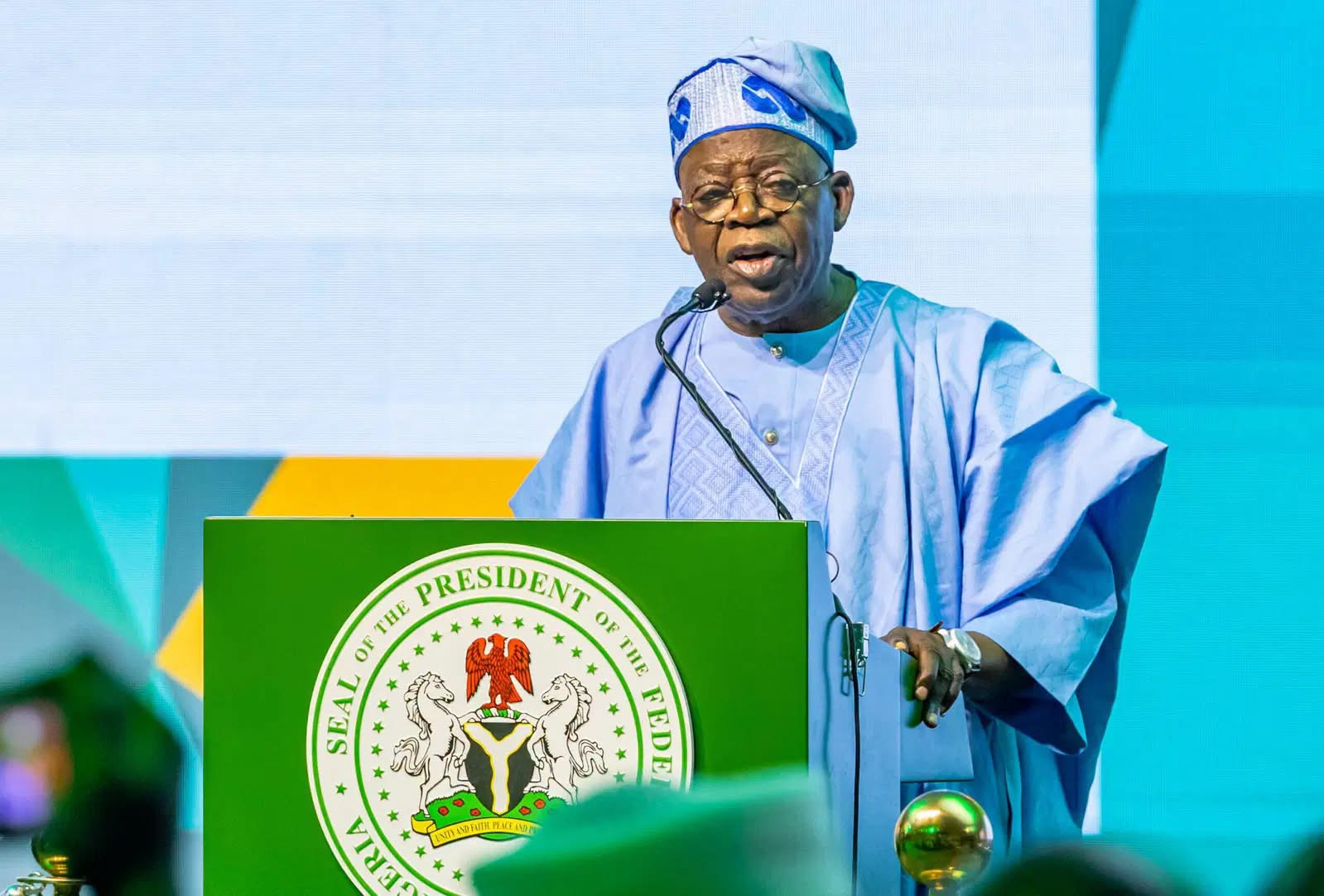
President Bola Ahmed Tinubu has announced a drop in the country’s dependence on crude revenues, signalling what the government said was a decisive shift toward a diversified economy.
He noted that his administration has built a diversified, high-growth economy, unlocking the potential of agriculture, manufacturing, and the digital and creative industries to shift the landscape away from single-sector dependence.
Speaking on Tuesday in Abuja during the fifth anniversary of the Nigerian Upstream Petroleum Regulatory Commission (NUPRC), the President, who was represented by Vice President Kashim Shettima, explained that through the joint effort of security agencies, operators, host communities, and the Commission, oil production is “now steadier and stronger”.
As a result, he declared that investors who once abandoned Nigeria in search of better deals were now returning, a development he said has ranked the country first among Africa’s leading destinations for upstream investment for two years running.
Announcing a drop in oil revenue dependence, President Tinubu said, “These gains matter well beyond the oil and gas industry. Under the Renewed Hope Agenda, we are building a diversified economy in which agriculture, manufacturing, the digital and creative industries all play their part.
“We have already reduced our dependence on oil revenue, and we intend to go further. But a diversified economy still needs energy, foreign exchange and investment, and that is where this sector serves the nation. Our gas can power homes and factories. Petroleum earnings support a stable naira and help fund the Federation.”
He stated that a well-run upstream industry is capable of creating jobs for Nigerian engineers, fabricators, and service companies, as his administration plans to use petroleum resources to build the wider economy, rather than depend on them.
The Nigerian leader promised to “pursue an energy transition that is just and suited to Nigeria’s needs,” declaring that this is the decade of Gas.
The President also vowed that his administration will not rest on its laurels until Nigeria becomes the destination of choice for hydrocarbon investment, maintaining that in the next phase, the government will insist on compliance and accountability.

